Your ASUS VivoBook 16 AMD Ryzen 7 7730U feels slower than expected – applications take longer to open, web browsing is sluggish, or the overall system responsiveness has declined compared to when the laptop was new. Power plan settings, driver updates, and startup program management restore full performance on the VivoBook 16 AMD.
This guide covers Windows power plan settings, AMD driver updates, startup program management, and thermal maintenance for the ASUS VivoBook 16 AMD Ryzen 7 7730U in Windows 11.
“VivoBook 16 AMD felt sluggish after some months. Task Manager showed CPU at 30 percent max – power plan was on Power saver. Changed to Balanced. AMD chipset driver update from ASUS Support also helped. System feels like new again.” – Suhaimi, freelance designer from Shah Alam

Why ASUS VivoBook 16 AMD Is Slow
The most common cause of slow performance on the VivoBook 16 AMD is the Windows power plan set to Power saver. In Power saver mode, Windows limits the AMD Ryzen 7 7730U maximum processor frequency to 50-60 percent of its rated speed, capping performance to extend battery life. CPU-intensive tasks like web browsing (JavaScript), document editing, and application launches run noticeably slower under these frequency caps. Thermal throttling from dust in vents or an outdated AMD chipset driver are secondary causes that reduce performance below even the Balanced mode ceiling.
- Power plan set to Power saver – CPU frequency capped at 50-60 percent of rated speed
- Thermal throttling from dust in vents or laptop on soft surface blocking airflow
- Excessive startup programs increasing boot time and consuming background RAM and CPU
- AMD chipset or Radeon driver outdated – scheduler and power management not optimized

Fix 1 – Set Power Plan to Balanced or High Performance
Go to Settings – System – Power – Power mode. Select Balanced or Best performance. In MyASUS – Customization – Scenario profiles, switch from Power Saving to Balanced or Performance. Both settings together allow the AMD Ryzen 7 7730U to run at full boost frequencies during demanding tasks. After changing power mode, open Task Manager – Performance – CPU and check the speed during web browsing – it should now reach 2.0-4.5GHz depending on workload, compared to 0.5-1.5GHz in Power saver mode. The improvement in application responsiveness is immediate after switching from Power saver to Balanced power mode.
Fix 2 – Disable Startup Programs
Open Task Manager (Ctrl+Shift+Esc) and go to Startup apps tab. Sort by Startup impact column. Disable all High impact startup programs that you do not need running at boot: game launchers (Epic, Steam), cloud sync clients (OneDrive, Dropbox), communication apps (Zoom, Teams), and manufacturer utilities not essential for daily work. Each disabled high-impact startup program reduces boot time and frees RAM and CPU background usage that would otherwise reduce available resources for foreground applications. After disabling startup programs, restart and measure boot time and application launch speed improvement.
Clean Thermal Vents
Power off the VivoBook 16 AMD. Use compressed air to blow through the exhaust vents on the side or rear of the laptop in short bursts. Dust accumulation in the heatsink fins causes AMD Ryzen 7 7730U thermal throttle where the CPU reduces its frequency to stay within safe temperature limits. Throttled performance can reduce CPU frequency to 30-40 percent of rated speed during sustained workloads. After vent cleaning, performance returns to full non-throttled operation. Regular vent cleaning every 6-12 months maintains consistent VivoBook 16 AMD performance for the laptop lifetime.
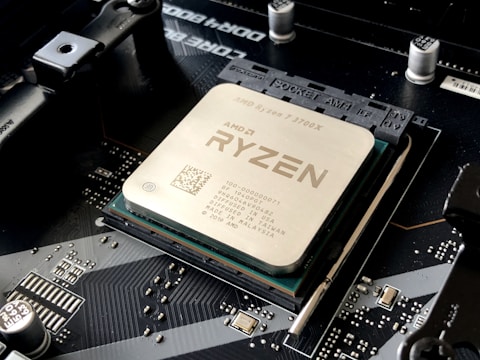
Fix 3 – Update AMD Chipset and Radeon Driver
Go to asus.com/support and download AMD Chipset Software and AMD Radeon driver for the VivoBook 16 AMD Ryzen 7 7730U model. Install chipset software first, then Radeon driver. Restart. Updated AMD chipset software for the Ryzen 7 7730U Barcelo-R platform includes improved P-state management and Precision Boost 2 tuning that delivers higher sustained performance within the laptop’s power and thermal envelope. Updated Radeon driver improves iGPU performance for video decoding, web rendering acceleration, and display output management. Both updates together improve perceived system responsiveness for daily productivity workloads.
Fix 4 – Add RAM for Better Dual Channel
If the VivoBook 16 AMD has 8GB RAM (4GB soldered + 4GB SO-DIMM, or 8GB soldered), adding an 8GB SO-DIMM in the available slot creates a 16GB dual channel configuration. AMD Ryzen 7 7730U with dual channel RAM improves integrated Radeon graphics performance by 40-60 percent due to doubled memory bandwidth. Dual channel also benefits multitasking with multiple browser tabs, document editing, and video playback simultaneously. The VivoBook 16 AMD SO-DIMM slot accepts DDR4-3200 SO-DIMM. Adding RAM is one of the most cost-effective performance upgrades for the VivoBook 16 AMD for users who feel the laptop lacks responsiveness during multi-app use.
Frequently Asked Questions
Why is ASUS VivoBook 16 AMD Ryzen 7 7730U slow?
Power plan on Power saver capping CPU to 50-60 percent speed. Change to Balanced in Settings – Power. Clean thermal vents. Disable high-impact startup programs.
How do I make ASUS VivoBook 16 AMD faster?
Balanced or High Performance power mode, disable startup programs, AMD chipset and Radeon driver update from ASUS Support, vent cleaning, RAM upgrade for dual channel.
Does ASUS VivoBook 16 AMD Ryzen 7 7730U support RAM upgrade?
Yes – one SO-DIMM slot for DDR4-3200 upgrade. Adding 8GB creates 16GB dual channel improving Radeon iGPU performance 40-60 percent.
Why does ASUS VivoBook 16 AMD get hot and slow?
Dust in thermal vents causing CPU throttle. Clean vents with compressed air. Use on flat hard surface. MyASUS Performance fan profile increases airflow during demanding tasks.
Conclusion
ASUS VivoBook 16 AMD Ryzen 7 7730U slow performance in Windows 11 is resolved primarily by switching from Power saver to Balanced or Performance power mode in Windows Settings and MyASUS Scenario profiles. Startup program disable in Task Manager reduces boot time and frees background CPU and RAM for foreground applications. Thermal vent cleaning removes dust that causes AMD Ryzen 7 7730U CPU frequency throttle during sustained workloads. RAM upgrade to 16GB dual channel provides the most significant long-term performance improvement for users multitasking with browser-heavy workflows on the VivoBook 16 AMD.
Ryan holds a Computer Science degree and has spent over 15 years troubleshooting Windows hardware and driver issues across major laptop brands. He writes practical, step-by-step guides for everyday users at softwaredriverdownload.com.
Leave a Reply